Blood Pressure
Blood pressure is the name given to the force that the beating heart causes in the arteries, veins, and blood vessels which carry blood around the body. When the heart contracts, forcing blood through the arteries and other blood vessels, your blood pressure goes up, and falls when the heart relaxes. High blood pressure can cause heart problems and strokes.
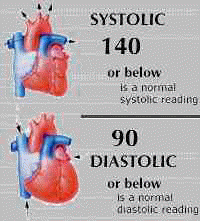
When blood pressure is measured, the result is given as two figures, one higher than the other, for example 120/80. This is because tests measure the pressure in vessels when the heart is contracting (the higher figure also called systolic blood pressure), and then when it is relaxing (the lower figure also called diastolic blood pressure).
Measuring blood pressure
 Blood pressure is measured using a cuff which is placed
around the upper arm and inflated until tight. It then deflates
and a blood pressure reading is taken.
Blood pressure is measured using a cuff which is placed
around the upper arm and inflated until tight. It then deflates
and a blood pressure reading is taken.
The target for adults is for blood pressure to be below 140/90, or below 130/80 in people with diabetes. It is advised that if blood pressure is above this range, action should be taken to bring it down.
Why high blood pressure is a concern
If blood pressure is high it causes a strain on blood vessels and the heart. High blood pressure can also cause kidney problems, and heart failure, when the heart is unable to pump blood around the body properly.
The higher the blood pressure is, the greater the risk of stroke, heart problems and kidney failure.
Causes of high blood pressure
People with a family history of high blood pressure, stroke, or heart disease are more likely to have high blood pressure. Diabetes and kidney disease also increase the risk.
Blood pressure can be raised by diet and lifestyle. Being overweight increases blood pressure, as does eating a fatty diet and drinking too much alcohol. Smokers, people who consume too much salt, and those who do not take regular vigorous exercise are also more likely to have high blood pressure.
How to take a manual Blood Pressure
Tools required: sphygmomanometer and a stethoscope
The following steps may be helpful to take a blood pressure.
- Sit up or lie down with the arm stretched out. The arm should be level with the heart.
- Put the cuff about 1 inch (2.5 cm) above the elbow (over the brachial artery). Wrap the cuff snugly around the arm. The blood pressure reading may not be correct if the cuff is too loose.
- Put the stethoscope earpieces in your ears.
- Using your middle and index fingers, gently feel for the brachial pulse. You will feel the pulse beating when you find it.
- Put the diaphragm of the stethoscope over the brachial artery pulse. Listen for the heartbeat.
- Tighten the screw on the bulb and quickly squeeze and pump the bulb. This will cause the cuff to tighten.
- Keep squeezing the bulb until the scale on the gauge reads about 160. Or, until the gauge reads at least 10 points higher than when you last hear the heartbeat.
- Slowly loosen the screw to let air escape from the cuff. Carefully look at the gauge and listen to the sounds. Remember the number on the gauge where you first heard the thumping sound.
- Continue to listen and read the gauge at the point where the sound stops.
- The number of the first sound is the systolic (top number) pressure.
- The second number is the diastolic (bottom number) pressure.
Estimating Blood Pressure
A patients systolic blood pressure can be estimated if you haven't got a sphygmomanometer to hand. This is acheived by feeling for a pulse, i.e.
- If a Radial pulse is present then the PT's systolic BP is > 90mmHg
- If a Brachial pulse is present then the PT's systolic BP is > 80mmHg
- If a Carotid pulse is present then the PT's systolic BP is > 60mmHg
This is only a rough guide and should not replace taking a proper blood pressure reading as soon as possible.